

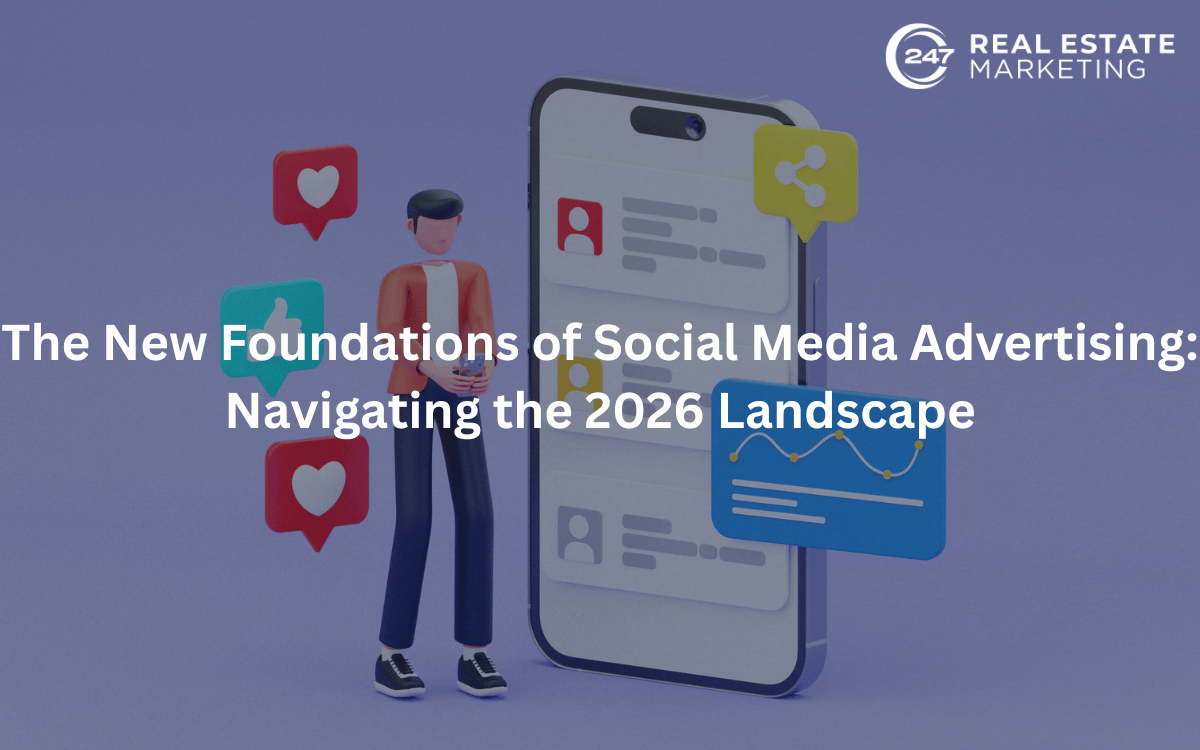
In the early days of digital marketing, social media was often viewed as a digital megaphone place where you posted a photo, added a few hashtags, and watched the likes roll in. However, as we navigate through 2026, that landscape has undergone a seismic shift. The “post and prayer” method is officially a relic of the past. Today, digital space is more crowded than ever, influenced by sophisticated AI algorithms and a shorter-than-ever human attention span.
To succeed today, businesses must view Social Media Marketing not as a hobby, but as a precision-engineered engine for growth. Whether you are a local boutique or a high-stakes real estate firm, understanding the foundations of modern social advertising is the difference between a high return on investment (ROI) and a wasted budget.
The Death of Organic Reach and the Rise of Paid Precision
For years, brands relied on organic reach to build their communities. But as platforms like Meta, TikTok, and LinkedIn have matured, they have transitioned into “pay-to-play” ecosystems. Current data suggests that the average organic post now reaches less than 2% of a brand’s followers.
The reason is simple: platforms want to prioritize content that keeps users engaged, which often means prioritizing friends, family, and high-quality paid placements. This makes paid advertising the essential “bridge” to your audience. Unlike organic posts, paid ads allow you to skip the line, putting your message directly in front of the people most likely to convert based on predictive intent.
The Power of Predictive Intent and AI
One of the most significant updates in 2026 is the shift from demographic targeting to predictive intent. In the past, you might target “Women, aged 25–35, living in New York.” Today, AI-driven tools analyze billions of data points to identify a user who is about to make a purchase before they even realize it themselves.
By utilizing advanced Digital Marketing Services, businesses can now tap into machine learning models that optimize bidding in real-time. These models don’t just look at who a person is; they look at their scrolling speed, their interaction with similar brands, and their recent search history across the web. This level of “surgical” precision ensures that your ad spend isn’t just being broadcast, it’s being invested where it has the highest probability of a “win.”
Platform Breakdown: Where Should You Be?
Every platform has its own “vibe” and utility. Choosing the right one is foundational to your success.
Meta (Facebook & Instagram)
Meta remains the titan of micro-segmentation. With its deep integration of Instagram Reels and Facebook Shops, it is the ultimate tool for eCommerce. In 2026, the focus has shifted heavily toward “Discovery Commerce,” where the platform’s AI suggests products to users based on their visual preferences.
TikTok: The King of Native Storytelling
TikTok has redefined how we consume ads. The most successful ads on TikTok don’t look like ads at all; they look like organic, user-generated content (UGC). For brands targeting Gen Z and Millennials, the key foundation here is “Entertain First, Sell Second.”
LinkedIn: The B2B Goldmine
For professional services, LinkedIn is unparalleled. While the cost-per-click (CPC) is traditionally higher, the quality of leads is significantly better. It allows you to target by job title, company size, and even specific decision-makers within an organization.
The Specialized Approach: Real Estate and High-Value Sales
Certain industries require a more nuanced approach than a standard “Buy Now” button. For example, high-ticket industries like property sales benefit from a hybrid approach. Many firms now employ a specialized Real Estate PPC Agency to manage the intersection of social ads and search intent. In this sector, social media serves as the “hook” (visualizing the dream home), while PPC ensures that the brand is there when the user goes to search for specific listings.
The Anatomy of a High-Converting Ad
If targeting is the engine, creative is the fuel. In 2026, consumers are “ad-blind” to traditional sales banners. To break through, your creative must follow these three pillars:
- Native Aesthetics: Your ad should blend into the user’s feed. If it looks like a commercial, people will swipe past it in less than a second.
- The 3-Second Hook: You have exactly three seconds to stop the thumb. This is usually achieved through a provocative question, a stunning visual, or an emotional “pattern interrupt.”
- Immersive Formats: Use Carousel ads for product discovery and full-screen Stories for storytelling. Augmented Reality (AR) filters are also becoming a foundational tool, allowing users to “try on” products or “walk through” a space virtually.
The Strategy: Testing, Scaling, and Retargeting
A common mistake many businesses make is “setting and forgetting” their ads. Modern social advertising requires a constant loop of A/B testing.
- A/B Testing: You should always be testing at least two versions of an ad by changing one variable at a time, such as the headline or the call-to-action (CTA).
- The Power of Retargeting: Most conversions don’t happen on the first click. A foundational strategy involves “The Pixel”, a piece of code on your website that tracks visitors. If a user views a product but doesn’t buy, you can serve them a specific retargeting ad with a discount or a testimonial to nudge them over the finish line.
Measuring Success Beyond the “Like”
In the foundation of 2026 marketing, “vanity metrics” (likes and follows) are secondary. The metrics that matter are:
- ROAS (Return on Ad Spend): For every dollar spent, how many dollars did you make?
- CPA (Cost Per Acquisition): How much does it cost to get one new customer?
- LTV (Lifetime Value): How much is that customer worth over the next year?
By focusing on these “bottom-line” numbers, you ensure that your social media presence is a profit center rather than a cost center.
Conclusion: Building for the Future
Social media advertising is no longer a luxury; it is a fundamental requirement for business survival. By moving away from broad, generic campaigns and embracing the power of AI, native creative, and platform-specific strategies, you can reach your audience with unprecedented accuracy. The digital landscape will continue to evolve, but the foundations remain the same: understand your audience, provide genuine value through your creativity, and never stop testing. Whether you are managing your campaigns in-house or partnering with a professional agency, the goal remains the same converting a digital “scroll” into a lifelong customer relationship. In the end, technology may change, but the human desire for connection and solutions remains the constant North Star of advertising.