A real estate website can have great listings, useful neighborhood guides, and well-written blogs, yet still struggle to turn organic traffic into meaningful results. One often-overlooked reason is that the pages aren’t properly connected.
That is where internal linking becomes important. When you connect relevant pages throughout your website, you make it easier for visitors to find the information they need while creating a clearer structure for search engines to understand.
For real estate businesses investing in Real Estate SEO Services, internal linking should be more than an afterthought. It can help connect educational content with service pages, neighborhood guides with listings, and property-related resources with conversion-focused pages.
The goal isn’t to add links everywhere. The goal is to create a logical journey that helps a visitor move naturally from one useful page to the next.
What Is Internal Linking?
Internal linking is simply the practice of linking one page on your website to another page on the same domain.
For a real estate website, an internal link might connect:
- A neighborhood guide to available properties
- A home-buying guide to a buyer service page
- A seller guide to a home valuation page
- A mortgage article for a financing resource
- A blog post to a relevant service page
- A property page to other properties in the same area
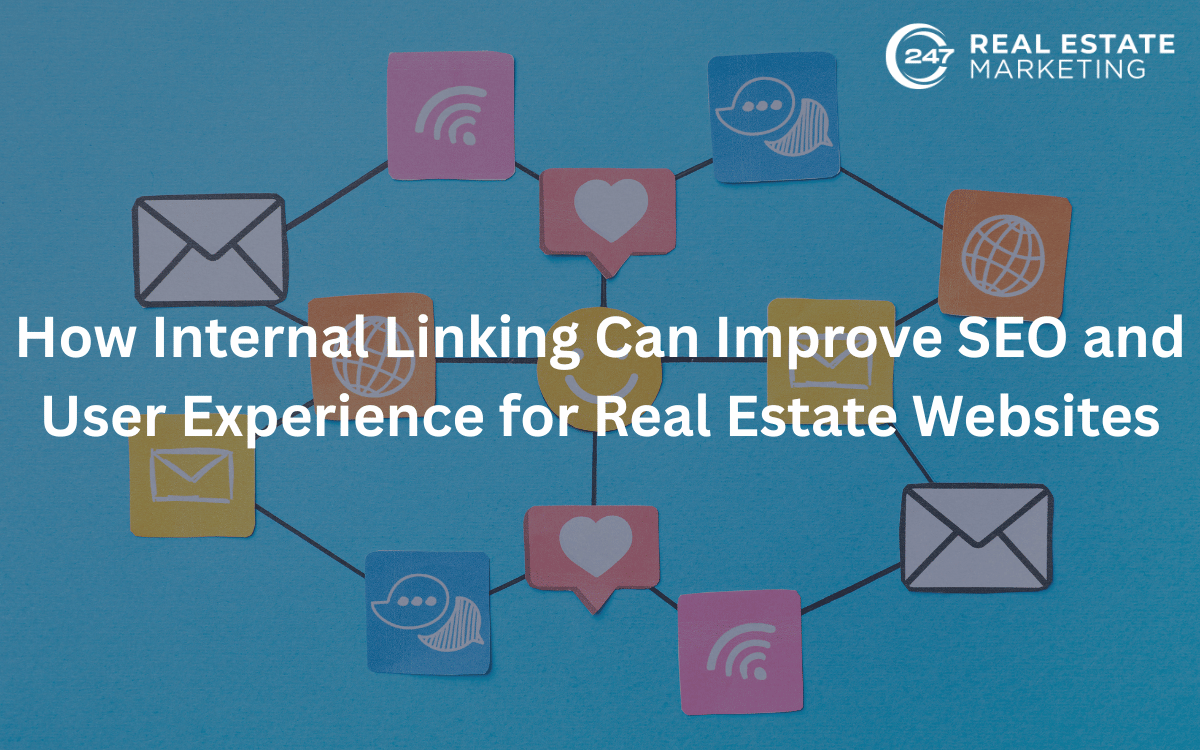
These connections create pathways through your website.
Think of your website as a city. Individual pages are different locations, while internal links are the roads connecting them. If there are no roads between important destinations, visitors may struggle to get where they want to go.
Why Internal Linking Matters for Real Estate Websites
Real estate websites often contain a large amount of information.
You may have separate pages for cities, neighborhoods, property types, buying advice, selling advice, market updates, listings, and services. Without a thoughtful linking structure, these pages can feel disconnected.
Internal links help bring that information together.
They can help visitors discover relevant content without having to return to Google and search again. At the same time, a logical internal structure gives search engines additional context about how different pages relate to one another.
For example, imagine you publish an article titled:
“What Should First-Time Buyers Know Before Purchasing a Home in Southampton?”
Within that article, you could naturally connect readers to:
- Your first-time homebuyer services
- A Southampton neighborhood guide
- Current Southampton property listings
- A guide to closing costs
- A home inspection checklist
Each link serves a purpose. The visitor gets additional information, and your website becomes easier to navigate.
Start With Your Most Important Pages
Before adding new internal links, identify the pages that matter most to your business.
These might include:
- Main service pages
- Buyer and seller pages
- High-value location pages
- Property category pages
- Lead-generation landing pages
- Important neighborhood guides
- Strong-performing blog posts
Once you’ve identified these pages, look through your existing content for natural opportunities to link to them.
For example, if your home-selling service page is important, an article about preparing a property for sale could naturally reference that service.
Don’t force the link into a paragraph where it doesn’t belong. The connection should make sense from the reader’s perspective.
Use Descriptive Anchor Text
Anchor text is the clickable wording used for a link.
Compare these two examples:
Weak:
“Click here to learn more.”
Better:
“Learn more about selling a home in Southampton.”
The second version gives the reader a clearer idea of what they will find after clicking.
Descriptive anchor text also creates better context around the relationship between two pages.
For real estate websites, your anchor text can naturally describe the destination:
- Southampton homes for sale
- First-time homebuyer guide
- Home valuation services
- Preparing your home for sale
- Long Island neighborhood guide
The key is to write naturally. Repeating the exact same keyword-rich anchor text every time can make your content feel forced.
Build Real Estate Topic Clusters
One of the strongest ways to approach internal linking is through topic clusters.
Instead of publishing unrelated blog posts, organize content around broader subjects.
For example, your main topic could be:
Buying a Home
Supporting articles might include:
- First-Time Homebuyer Checklist
- How Much House Can You Afford?
- Questions to Ask During a Home Showing
- Understanding Closing Costs
- Home Inspection Tips
- How Mortgage Pre-Approval Works
These articles can link to one another where relevant and point toward your main buyer-focused service page.
The same approach can be used for sellers.
Seller Topic Cluster
A seller-focused content group could include:
- How to Prepare Your Home for Sale
- How Much Is My Home Worth?
- Common Home Selling Mistakes
- Best Improvements Before Listing
- How Long Does It Take to Sell a Home?
- What Happens During the Closing Process?
When these pages are connected thoughtfully, visitors have more opportunities to explore the subject without leaving your website.
Links From Blogs to Revenue-Generating Pages
A common mistake is treating blog content as an isolated source of traffic.
A blog should have a purpose beyond attracting visitors.
Suppose someone lands on an article about preparing a property for sale. They may not be ready to contact an agent immediately, but they could become interested after reading useful information.
That’s where a relevant internal link can help.
You might naturally transition from educational content to a service page with wording such as:
“Once your property is ready, the next step is creating a pricing and marketing strategy that attracts serious buyers.”
The link can then take the reader to the appropriate service page.
This creates a bridge between informational search intent and commercial intent.
Don’t Overdo Internal Links
More links aren’t automatically better.
A page filled with dozens of unrelated internal links can become distracting and difficult to read.
Instead, focus on relevance.
Before adding a link, ask:
“Would this link genuinely help someone who is reading this section?”
If the answer is yes, include it.
If the link exists only because you want to promote another page, leave it out.
Quality and context matter more than simply increasing the number of links.
Audit Your Existing Internal Links
You don’t need to wait until you publish new content to improve your internal linking.
Start with an audit of your existing website.
Look for:
- Important pages with very few internal links
- Blog posts that don’t link to related content
- Broken internal links
- Generic anchor text
- Pages buried too deeply within the site
- Older articles that could link to newer resources
- Service pages that aren’t supported by relevant content
A simple audit can reveal opportunities that are easy to fix.
For example, you might discover that an older neighborhood guide receives consistent organic traffic but doesn’t link to your related property listings or buyer services. Adding those connections could create a much stronger visitor journey.
Thinking About the User Journey
The best internal linking strategy begins with the visitor, not Google.
Consider what someone is likely to want next.
A visitor reading “How to Prepare Your Home for Sale” may want to know how much their property is worth.
Someone reading a neighborhood guide may want to see available homes.
Someone browsing first-time buyer advice may want to understand financing or speak with a real estate professional.
Use these natural next steps to determine where your internal links should lead.
When your website anticipates those questions, visitors can move through the site with less friction. That can contribute to Better Search Visibility while also creating a more useful experience.
Keep Internal Linking Relevant as Your Website Grows
Internal linking isn’t something you do once and forget.
As you publish new articles, service pages, market reports, and location content, revisit older pages and look for new connections.
You should also periodically review whether your existing links still make sense.
A useful routine is to:
- Identify your most important pages.
- Review of recently published content.
- Add links to relevant existing resources.
- Update older articles with links to useful new content.
- Check for broken or outdated links.
- Review your most important topic clusters.
- Measure whether visitors are moving between relevant pages.
This turns internal linking into an ongoing part of your content strategy rather than a one-time SEO task.
Final Thoughts
Internal linking may seem like a small part of a real estate website, but it can have a meaningful impact on how people experience your content.
The right links help visitors move from questions to answers, from research to listings, and from educational content to services. They also create a clearer relationship between the different pages across your website.
Start small. Identify your most important pages, find relevant articles that can support them, improve your anchor text, and build logical topic clusters around your core real estate services.
Most importantly, don’t think of internal links as something you add simply to satisfy an SEO checklist. Think of them as helpful directions for your visitors.
When your content naturally guides people toward the next useful step, SEO and user experience start working together. And when that journey is paired with strong Real Estate Conversion Rate Optimization Services, the traffic your website earns has a much better opportunity to become genuine inquiries, consultations, and clients.