


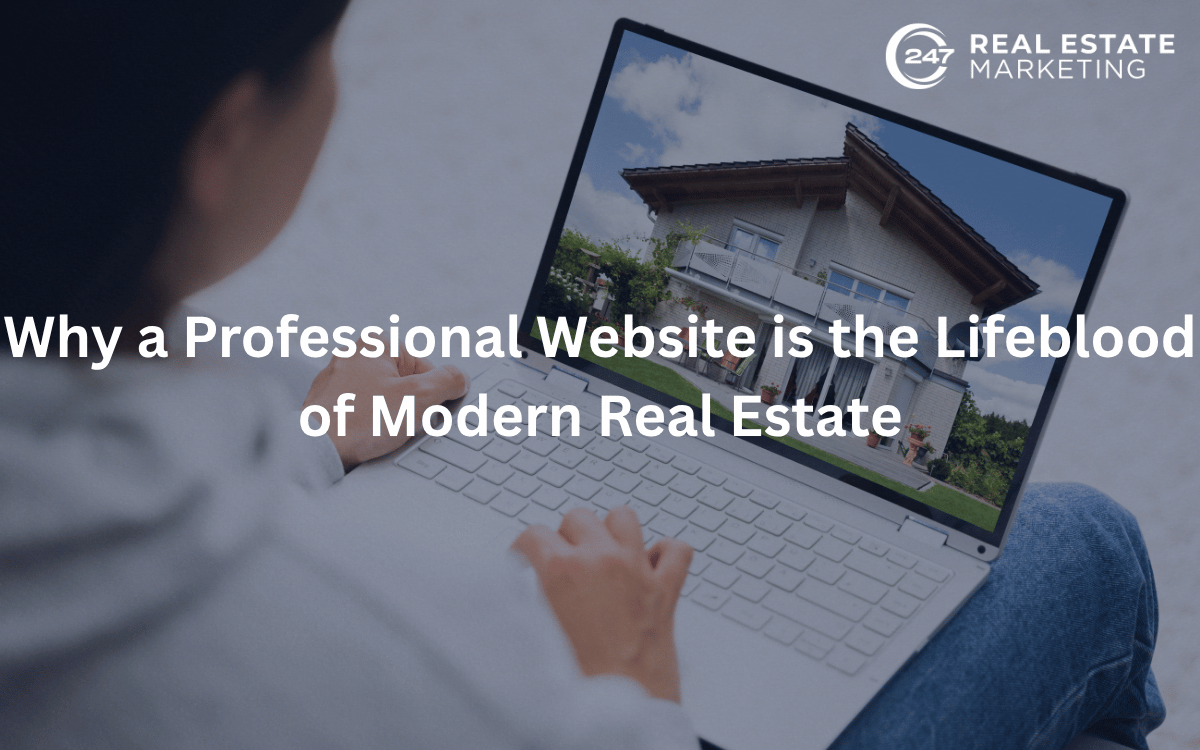
In the current property market, the “curb appeal” of a home is no longer the first thing a buyer notices. Long before they drive through a neighborhood or step onto a manicured lawn, they have already judged a property and the agent representing it through a smartphone screen.
The real estate industry is undergoing a seismic digital shift. According to recent data from the National Association of Realtors (NAR), 97% of all homebuyers used the internet in their home search, and for 47% of them, looking at properties online was the very first step they took. In this environment, a business without a high-performance digital presence isn’t just invisible; it’s non-existent.
As outlined by industry experts at 247 Real Estate Marketing, a website is no longer a static digital brochure. It is a 24/7 sales agent, a lead generation engine, and a credibility anchor. This post explores why investing in professional Real Estate Website Design is the most critical move a property business can make today.
1. The Death of the “Digital Brochure” and the Rise of UX
Gone are the days when a website was simply a place to list your office address and a phone number. In 2024, the success of a real estate platform hinges entirely on User Experience (UX).
When a potential buyer lands on your site, they are looking for ease of use. If the images take too long to load, if the navigation is confusing, or if the search filters are clunky, they will bounce back to Google within seconds. High-quality UX means creating a seamless journey from the landing page to the “Book a Viewing” button.
Why UX Matters Statistically:
- Mobile Dominance: Over 60% of real estate searches happen on mobile devices. A professional website uses responsive design to ensure the experience is just as fluid on an iPhone as it is on a desktop.
- The 3-Second Rule: Studies show that if a page takes longer than three seconds to load, 40% of users will abandon it. Professional design optimizes backend code and image compression to keep users engaged.
2. SEO: Winning the Battle for Organic Visibility
You could have the most beautiful luxury listings in the city, but if they are buried on page 10 of Google search results, no one will see them. This is where Search Engine Optimization (SEO) becomes the “silent partner” of your real estate business.
A professional website allows you to target “intent-based” keywords. When a user types “3 BHK flats for sale in [City Name]” or “commercial office space near me,” SEO ensures your website is the answer to their question.
The Modern SEO Strategy:
Recent updates to Google’s algorithms (such as the Helpful Content Update) prioritize websites that provide genuine value. A professional site allows you to host a blog much like the insights shared by 247 Real Estate Marketing that educates buyers on market trends, home-buying checklists, and neighborhood guides. This doesn’t just improve your ranking; it builds authority.
3. High-Conversion Lead Generation
The goal of any real estate professional is a high-quality lead. Relying solely on third-party listing portals (like Zillow, 99Acres, or MagicBricks) can be a “trap.” On those platforms, your listings are surrounded by your competitors’ ads.
On your own professional website, you own the environment. You can integrate:
- Lead Capture Forms: Strategically placed “Request a Callback” or “Download Brochure” buttons.
- CRM Integration: Automatically funnelling visitor data into your management system for instant follow-up.
- Gated Content: Offering a “Market Report 2024” in exchange for an email address.
By controlling the platform, you move from “chasing” leads to “attracting” them.
4. Virtual Tours and the “Phygital” Reality
The real estate world has entered the “Phygital” era a blend of physical and digital experiences. With the rise of Matterport 3D tours and drone cinematography, buyers expect to walk through a house virtually before they ever leave their couch.
A professional website acts as a high-definition theater for these assets. Integrating 360-degree virtual tours can increase time-spent-on-site by up to 300%. For international investors or out-of-state buyers, this transparency is the deciding factor in whether they trust a developer or agency.
5. Building the “Trust Factor”
Real estate is a high-ticket industry built on trust. For most people, buying a home is the most significant financial decision of their lives. They are not just buying bricks and mortar; they are buying into a vision.
A website with a professional “About Us” section, verified testimonials, and a portfolio of successfully delivered projects serves as a digital “Certificate of Trust.” It proves you are a legitimate entity with a track record. In an era of online scams and fly-by-night operators, a robust website with a secure (HTTPS) connection is a badge of safety for the consumer.
6. The Synergy of Real Estate Digital Marketing Services
A website does not exist in a vacuum. It is the central hub of a much larger ecosystem. When you invest in Real Estate Digital Marketing Services, the website is the “destination” for all your “traffic sources.”
- Social media: Your Instagram and Facebook posts should drive users back to a specific listing page on your site.
- PPC & Google Ads: Paid ads are most effective when they land on a high-converting, professional landing page tailored to that specific ad.
- Email Marketing: Newsletters featuring “Property of the Month” keep your brand top-of-mind, drawing past clients back to your site.
Without a professional website, your marketing dollars are essentially being spent to send people to a dead end.
7. Data Analytics: Knowing Your Customer
One of the most underrated benefits of having your own website is the data. Tools like Google Analytics allow you to see exactly what your customers want.
- Which floor plans are getting the most clicks?
- Which neighborhood is generating the most interest?
- At what point in the contact form are people dropping off?
This “Big Data” allows real estate businesses to pivot their strategies in real-time. If you see massive interest in 1-BHK studio apartments but your marketing is focused on luxury villas, you can adjust your budget to meet the actual market demand.
8. 24/7 Availability with AI and Automation
Real estate doesn’t sleep. A buyer in a different time zone might be looking for a property at 2:00 AM. A professional website equipped with AI Chatbots can:
- Answer basic questions about pricing and square footage.
- Schedule site visits automatically.
- Qualify leads by asking for their budget and preferred location.
This ensures that even while you sleep, your business is interacting with potential clients and moving them down the sales funnel.
9. Cost-Effectiveness in the Long Run
Many small to mid-sized agencies shy away from professional web development due to the upfront cost. However, when compared to traditional media (billboards, newspaper ads, or physical flyers), a website offers the highest Return on Investment (ROI).
A billboard stays up for a month and is seen by everyone (most of whom aren’t looking for a house). A website stays up forever and is seen specifically by people searching for property. It is a one-time investment that pays dividends for years.
10. Staying Competitive in 2024 and Beyond
The gap between “tech-savvy” real estate firms and “traditional” firms is widening. As the younger generation (Millennials and Gen Z) becomes the primary home-buying demographic, their preference for digital-first interactions will become the standard.
If your competitor offers an interactive map, instant WhatsApp integration, and a searchable database of properties while you offer a PDF brochure, you have already lost the sale.
Conclusion: Your Digital Foundation
In summary, a professional website is the foundation upon which a modern real estate empire is built. It facilitates better User Experience, serves as the anchor for all Real Estate Digital Marketing Services, and utilizes high-end Real Estate Website Design to turn casual browsers into committed buyers.
As the insights from 247 Real Estate Marketing suggest, the digital transformation of real estate is not a trend, it is a permanent evolution. To survive and thrive, businesses must move beyond “just being online” and strive to dominate the digital landscape with a website that is as impressive as the properties they sell.