


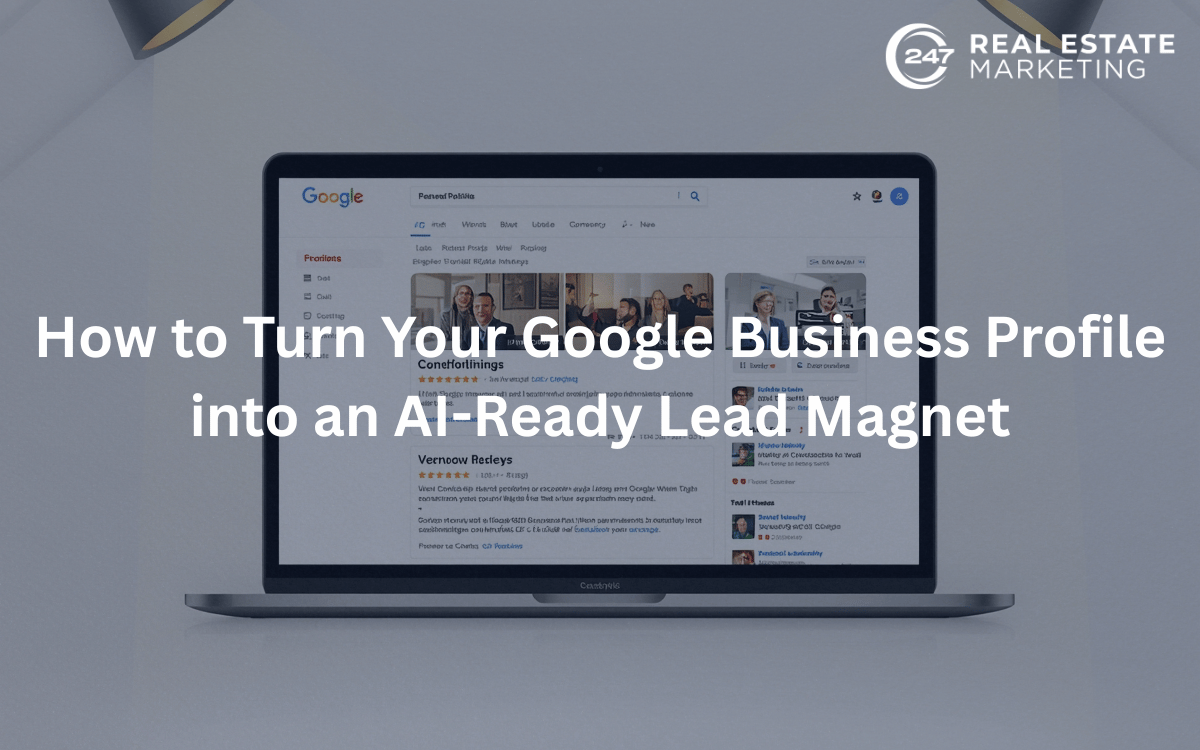
In the rapidly shifting landscape of the digital age, 2026 marks a definitive turning point for local businesses. We have officially moved past the era where a Google Business Profile (GBP) was simply a digital “yellow pages” listing. Today, your profile is the heartbeat of your local identity a dynamic, AI-driven data source that feeds directly into Google’s Search Generative Experience (SGE) and voice-activated assistants.
If you aren’t treating your GBP as a living social channel, you aren’t just losing visibility; you’re becoming invisible to the modern consumer. Based on recent industry shifts and the latest update, here is the comprehensive blueprint for mastering Google Business Profile optimization in 2026.
The Paradigm Shift: From Directory to AI Feed
The most significant update in 2026 is how Google categorizes your business data. Previously, the algorithm relied heavily on text-based keywords. Now, Google utilizes “Vision AI” and multi-modal processing. This means the AI “looks” at your photos to identify products, “listens” to your video updates for context, and cross-references your reviews against global data to determine your authority.
Recent statistics show that 82% of local searches now result in an AI-generated overview before a user ever sees a traditional website link. This makes AI Search Optimization the single most important strategy for any local business owner this year. You are no longer just optimizing for a human; you are teaching an AI why you are the best answer to a specific local problem.
1. The Foundations: Verification and Consistency
In 2026, Google has doubled down on security to combat the rise of AI-generated spam listings. Video verification is now the standard. Business owners are often required to film a continuous video showing their street signage, their interior workspace, and even proof of management (like opening a locked door or accessing a POS system).
Beyond verification, NAP (Name, Address, Phone) consistency remains the bedrock of local SEO. However, the precision required has intensified. Even a discrepancy between “Suite 200″ on your website and “200” on your GBP can trigger a manual review. In a world of automated data syncing, ensuring your information is identical across all Digital Marketing Services and directories is a non-negotiable first step.
2. Visual Storytelling and “Photo Velocity”
If a picture is worth a thousand words, in 2026, a photo is worth a thousand clicks. Google’s Vision AI now tags your images automatically. If you’re a bakery and you upload a photo of a sourdough loaf, Google identifies the texture, the crust, and the environment. When someone searches for “crusty sourdough near me,” your profile is served because the AI has visual proof of your product.
The strategy for 2026 is Photo Velocity. Static profiles are dead profiles. Aim to upload 3–5 high-quality images per week. This isn’t about professional photography; it’s about “Proof of Life.” Show your team at work, your latest inventory, and your happy customers.
Furthermore, short-form video (30 seconds or less) has become a primary ranking signal. Profiles that utilize the “Update” feature to post video stories see a 40% higher engagement rate than those using text alone.
3. The New Rules of Reviews: Quality and Recency
We used to believe that the business with the most reviews won. In 2026, the algorithm matured. Google now prioritizes Review Recency and Sentiment Depth.
A business with 500 reviews from two years ago will be outranked by a business with 50 reviews from the last three months. Statistics indicate that 73% of consumers disregard reviews older than 90 days. To stay relevant, you need a “Review Velocity” strategy and a consistent stream of new feedback.
Additionally, the “Perfect 5.0” myth has been debunked. Data shows that profiles with a 4.5 to 4.8 rating see higher Engagement and Conversions because they appear more authentic to both users and AI filters. Don’t fear a 4-star review; instead, focus on how you respond to it. Google tracks your “Response Latency,” so aim to reply to every review within 24 hours to signal that you are an active, customer-centric business.
4. Hyper-Local Authority through Q&A
The Q&A section of your GBP is often overlooked, but in 2026, it is a goldmine for SEO. Google uses these questions to populate its AI Overviews.
One of the best “hacks” this year is to seed your own Q&A. You are legally allowed to ask and answer your own questions. Use this space to address common “long-tail” search queries:
- “Do you offer contactless pickup for gluten-free cakes?”
- “Is there free parking available behind the office?”
- “What are your holiday hours for the upcoming long weekend?”
By providing these answers yourself, you ensure the information is accurate and you provide the AI with the specific data points it needs to recommend you in voice searches.
5. Website and Profile Alignment
Your GBP does not exist in a vacuum. Google constantly “crawls” your linked website to verify the claims made on your profile. If your GBP lists “Emergency Plumbing” as a service, but your website doesn’t have a dedicated page or significant mention of emergency services, Google may “shadow-rank” you lower for that term due to a lack of corroborating evidence.
Ensure your website’s “Contact” and “About” pages are perfectly synced with your GBP attributes. This “cross-verification” is a key component of how Google builds a “Knowledge Graph” for your brand.
6. The Weekly Maintenance Sprint
Success in 2026 isn’t about a one-time setup; it’s about a routine. You don’t need hours, just 20 to 30 minutes a week. Set a recurring calendar invite to perform the following:
- Audit Suggestions: Check for “suggested edits” from users or competitors. Inaccurate hours can lead to a massive drop in trust.
- Post an Update: Use the “What’s New” post type. Include a call-to-action (CTA) button like “Book Now” or “Order Online.”
- Review Audit: Reply to new reviews and check if any previous customers have edited their feedback.
- Monitor Insights: Look at the “Search Terms” report. If you see people finding you for a keyword you didn’t expect, create a post or add a photo related to that keyword.
Final Thoughts
As we move deeper into 2026, the gap between businesses that embrace AI-readiness and those that rely on “old-school” SEO will widen. Optimizing your Google Business Profile is no longer a “set it and forget it” task, it is a critical pillar of your digital identity.
By focusing on high photo velocity, maintaining review recency, and ensuring your data is structured for AI consumption, you position your business to be the top choice in your local market. The tools have changed, and the algorithm has evolved, but the goal remains the same: being the most trusted, most visible answer to your customer’s needs.